


Thinking About Tapping into Your 401(k) To Buy a Home? Read This FirstWith affordability still challenging, you may have seen recent headlines suggesting buyers could tap into their 401(k) to help
What Homeowner’s Insurance Covers
Most standard homeowner’s insurance policies provide protection in three key ways:
Repairs and rebuilding costs
If your home is damaged by fire, storms, or other covered events, insurance helps pay for repairs or even a full rebuild if necessary.Personal belongings
Coverage typically extends to items like furniture, electronics, clothing, and jewelry if they are stolen or damaged.Liability protection
If someone is injured on your property, your policy can help cover medical bills or legal expenses.
That peace of mind matters. But lately, it has been coming at a higher price.
Why Home Insurance Premiums Are Rising
Homeowner’s insurance costs have been climbing nationwide, and there are a few key reasons behind the trend.
According to the Insurance Research Council, the biggest drivers include:
More frequent and severe weather events, which lead to a higher number of insurance claims
Rising construction costs, including labor and building materials
Higher expenses for insurers when repairing or rebuilding damaged homes
All of that adds up to increased premiums for homeowners.
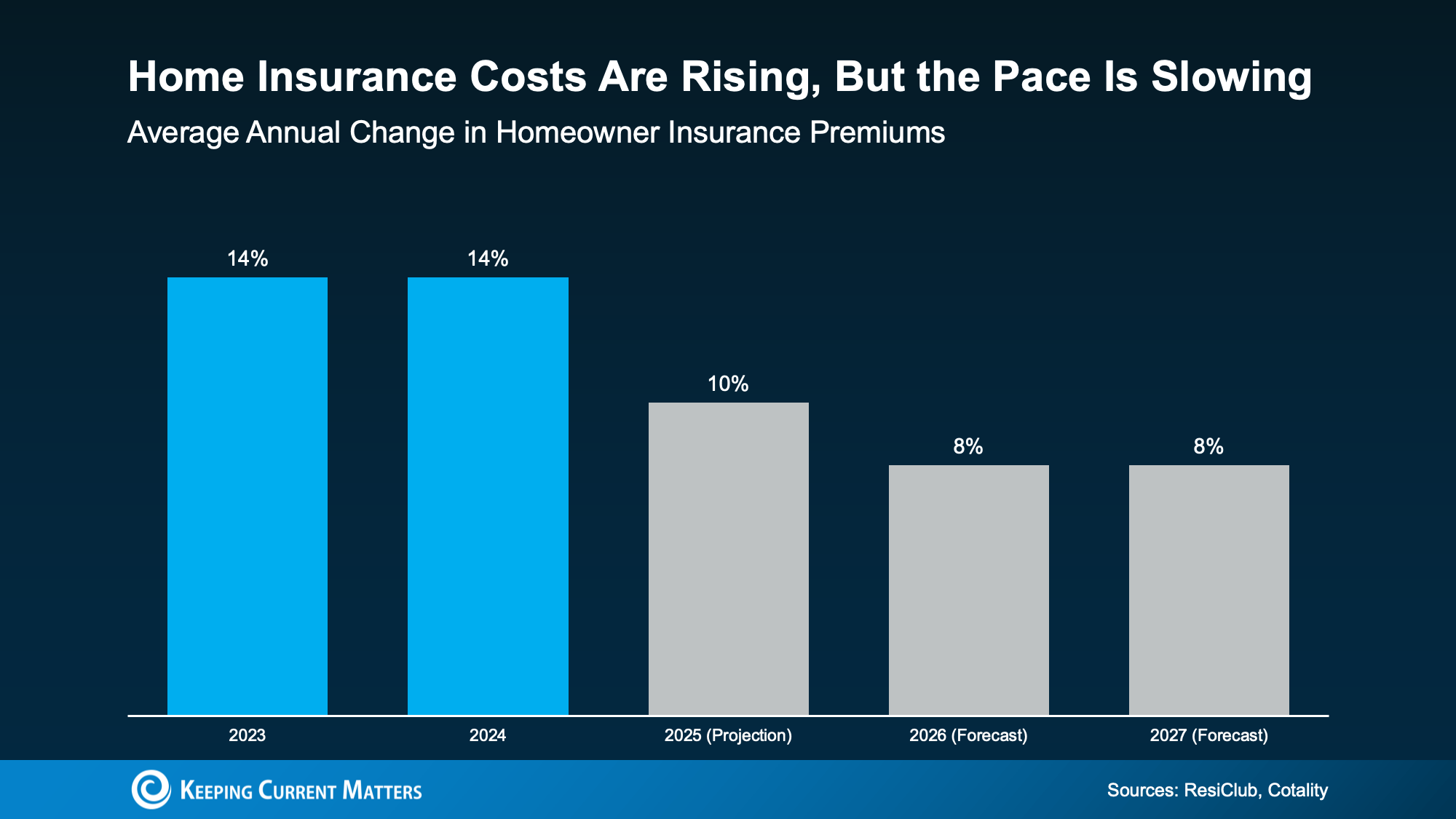
Here is some encouraging news. While insurance costs are still rising, the pace of those increases appears to be easing.
According to ResiClub and Cotality:
In 2023 and 2024, insurance costs rose about 14 percent per year
In 2025, they increased closer to 10 percent
In 2026 and 2027, increases are projected around 8 percent annually
Premiums are still going up, but the rate of increase is slowing, which can help buyers plan more confidently.
There is also another factor working in buyers’ favor.
Mortgage rates have been trending lower, which can help offset some of the added insurance costs. As Michael Gaines, Senior Vice President of Capital Markets at Cardinal Financial, explains, rising taxes and insurance create pressure, but they do not erase the benefits of a lower interest rate. Smart loan strategies and thoughtful planning can still make homeownership achievable.
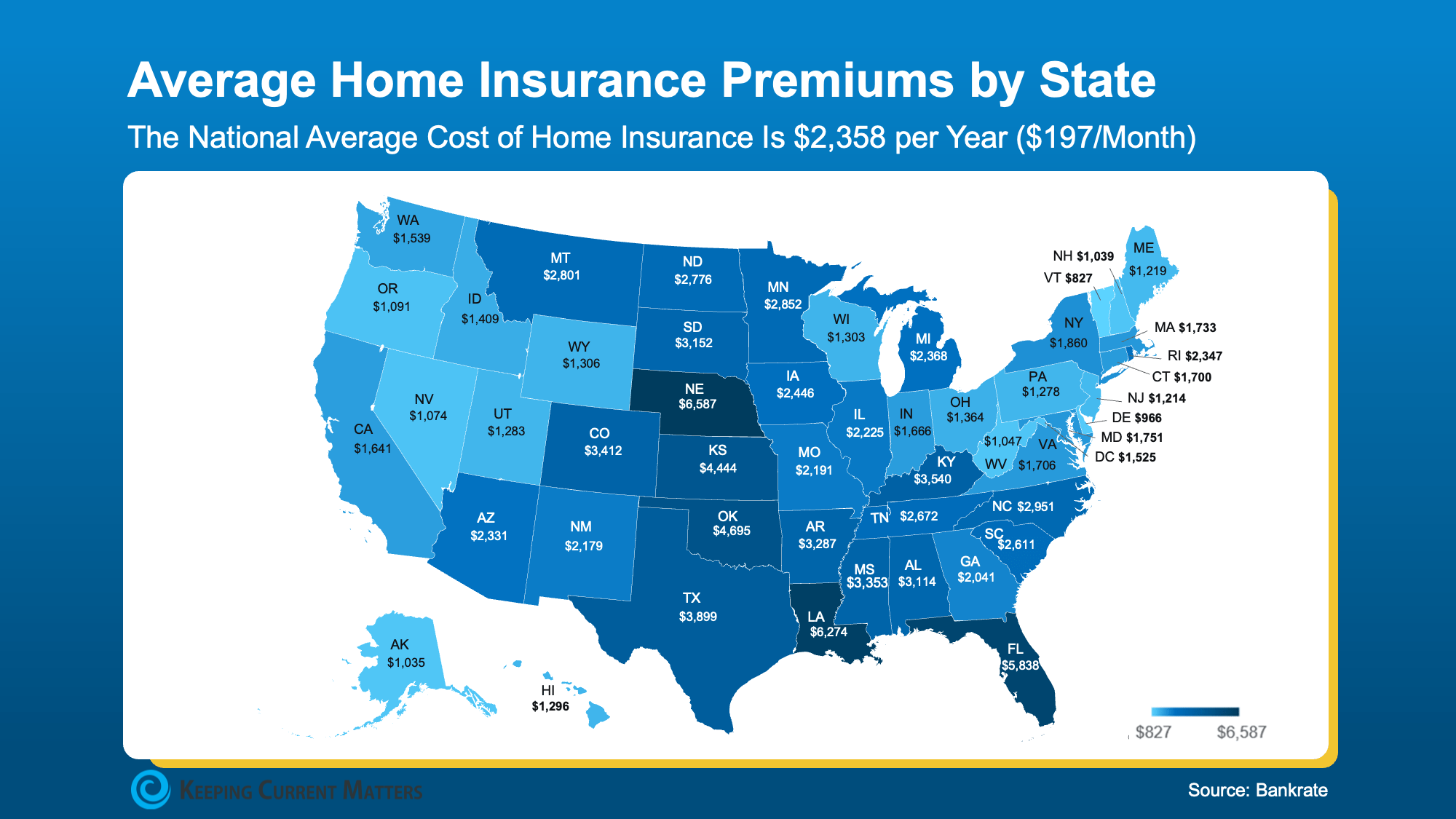
Insurance Costs Vary by Location
Just like home prices, homeowner’s insurance premiums vary widely depending on where you buy.
Your costs will depend on factors like:
Location and regional risk factors
Home price and replacement cost
Coverage limits and deductibles
The age and condition of the property
How to Plan for Rising Insurance Costs
Your first year of homeowner’s insurance is usually included in your closing costs. After that, it becomes an ongoing monthly or annual expense. Knowing premiums are rising helps you build a more realistic budget from the start.
If you are looking for ways to manage costs, Insurify and NerdWallet recommend a few smart strategies:
Shop around and compare quotes from multiple insurers
Bundle home and auto policies to unlock discounts
Ask about discounts you may qualify for
Highlight upgrades like a newer roof or storm resistant features
Maintain strong credit, since better scores can lead to lower premiums
Small steps can add up to meaningful savings.
Bottom Line
Homeowner’s insurance is not optional, and it is not something you want to cut corners on. It protects what is likely your biggest investment.
While costs are rising, understanding what drives those increases and how to shop wisely can make a real difference. Planning ahead helps you buy with confidence and avoid surprises after closing.
If you are thinking about buying a home, make sure insurance costs are part of the conversation from day one. The right preparation now can save you stress and money later.

